


- Ethereum has delayed the October 26 Glamsterdam upgrade on the Hoodi testnet so developers can look into potential smart contract compatibility problems tied to EIP-8037.
- This rescheduling impacts testnet timelines rather than the Ethereum mainnet, and a new target date has not yet been shared by developers.
Ethereum core contributors have delayed the upcoming Glamsterdam upgrade on the Hoodi testnet following worries regarding how one of the proposed modifications might impact pre-existing smart contracts. Although the upgrade was initially slated for October 26, the activation date has been lifted while experts analyze these compatibility hurdles.
The Ethereum Foundation made the delay public on October 22, explaining that additional time is required to study EIP-8037 and how it interacts with contracts currently operating on the Ethereum mainnet. While this pause does not signify that an actual issue has been verified on the live network, developers have yet to establish a revised timeframe for the Hoodi rollout.
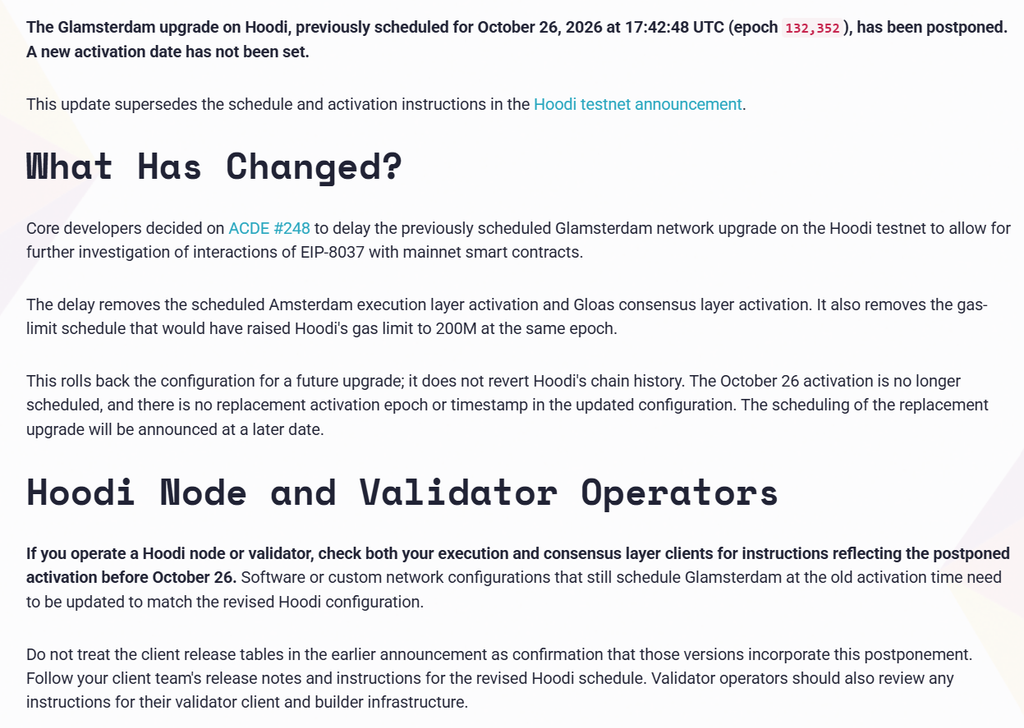
Additionally, the original timeline featured a bump to Hoodi’s gas limit, raising it to 200 million at epoch 132,352. That adjustment has likewise been stripped from the delayed deployment plan.
EIP-8037 Raises Smart Contract Compatibility Questions
Under the title State Creation Gas Cost Increase, EIP-8037 suggests altering the gas pricing associated with transactions that generate a fresh blockchain state, such as new accounts and persistent contract storage. The goal is to align these costs more closely with the long-term storage burdens shouldered by Ethereum nodes.
Nevertheless, shifting gas expenses can alter the functionality of established smart contracts, particularly if their code depends on fixed assumptions about transaction costs. Security company ChainSecurity reportedly flagged 13 practical examples of contract patterns vulnerable to these shifts and has collaborated with impacted projects to look into them further.
As a comprehensive Ethereum network upgrade, Glamsterdam bundles updates for both the execution and consensus layers. Among its targeted enhancements are enshrined proposer-builder separation via EIP-7732 and block-level access lists via EIP-7928, both designed to optimize transaction execution and block production.
The upgrade has already rolled out successfully on the Sepolia testnet, going live there on October 6. Granting extra time for Hoodi allows developers to thoroughly vet potential compatibility hiccups before moving forward with additional testing phases.
For standard Ethereum mainnet users and ETH holders, this postponement calls for no immediate actions. Because the schedule change affects only the Hoodi public test network, it does not set a firm mainnet activation schedule. Developers must first clear up these open questions before mapping out the subsequent steps for the testnet upgrade.
Frequently Asked Questions
Why was the Glamsterdam upgrade delayed on Hoodi?
Developers postponed the upgrade to investigate potential smart contract compatibility issues involving EIP-8037.
Does this delay affect the Ethereum mainnet?
No, the postponement impacts testnet plans only and does not change or set a mainnet launch date.
What is EIP-8037?
EIP-8037, or the State Creation Gas Cost Increase, proposes altering gas fees for transactions that create a new blockchain state to better reflect long-term node storage costs.
Has Glamsterdam launched on any other testnets?
Yes, the upgrade successfully activated on the Sepolia testnet on October 6.
