

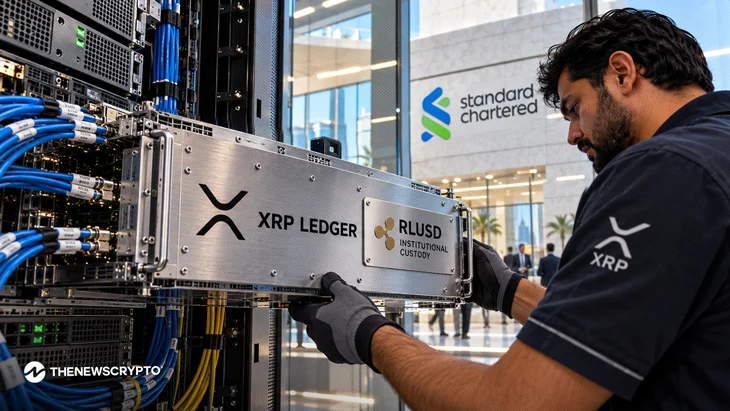
- Standard Chartered has rolled out an RLUSD custody offering on the XRP Ledger, which is currently accessible to qualified institutional customers via its DFSA-regulated DIFC branch.
- Standard Chartered, LMAX Group, and Ripple intend to utilize RLUSD as qualifying collateral for select trading products.
- This collateral integration is not active yet and depends on ongoing testing, final documentation, and regulatory approvals.
Standard Chartered has introduced institutional-grade custody for Ripple USD (RLUSD) on the XRP Ledger (XRPL), allowing eligible clients to access the stablecoin through the institution’s digital asset custody platform.
The financial institution rolled out the service on October 12, 2026. Delivery is handled via Standard Chartered’s Dubai International Financial Centre (DIFC) branch, which operates under the regulatory oversight of the Dubai Financial Services Authority (DFSA).
This development provides institutional clients with a secure pathway to store RLUSD through formal banking custody infrastructure instead of self-managing the tokens. RLUSD functions as Ripple’s US dollar-backed stablecoin tailored for applications spanning trading, payments, and alternative financial services.
In addition, Standard Chartered is collaborating with LMAX Group and Ripple on an upcoming initiative to qualify RLUSD as accepted collateral for specific LMAX products. This particular setup is not yet operational.
Ripple and LMAX Plan RLUSD Collateral Integration
Based on the proposed framework, eligible RLUSD kept in custody will register toward the collateral value recognized by LMAX Group, eliminating the necessity to transfer underlying tokens directly over to the trading venue.
According to the firms, this structure could grant institutional users greater versatility when employing digital assets for trading purposes, while simultaneously mitigating risks associated with asset movements and assisting in counterparty risk oversight. It is additionally meant to streamline how participants allocate capital between trading activities and collateral accounts.
The prospective integration continues to rely upon completion of final paperwork, successful trials, relevant legal and regulatory compliances, internal clearances, and operational readiness across applicable regions. No official release date has been disclosed by the companies.
Waqar Chaudry, global head of digital assets for securities and transaction services at Standard Chartered, noted that institutions are seeking exposure to digital asset marketplaces while upholding conventional risk-management and custody guidelines.
Jack McDonald, who leads Ripple’s stablecoin division, explained that the collaboration merges RLUSD on the XRPL with the custody capabilities of Standard Chartered and the institutional trading network of LMAX.
This disclosure arrives on the heels of Standard Chartered expanding its wider digital asset custody operations. During September, the bank onboarded LMAX Group as a custody customer across its Luxembourg and Dubai branches.
This newest milestone incorporates RLUSD into that institutional lineup, while the anticipated collateral framework may broaden the stablecoin’s utility past simple storage and settlement and into live trading procedures.
Frequently Asked Questions
What is Standard Chartered’s new RLUSD custody service?
It is a digital asset custody solution that allows eligible institutional clients to securely hold Ripple USD (RLUSD) on the XRP Ledger through Standard Chartered’s DFSA-regulated DIFC branch.
Is the RLUSD collateral integration currently active?
No, the plan to use RLUSD as eligible collateral for select LMAX Group products is not yet live and remains subject to testing, documentation, and regulatory requirements.
Which companies are involved in the RLUSD collateral project?
The initiative involves Standard Chartered, Ripple, and LMAX Group.
Where is the custody service operated from?
The service is offered through Standard Chartered’s branch located in the Dubai International Financial Centre (DIFC), which is regulated by the Dubai Financial Services Authority (DFSA).
