

-
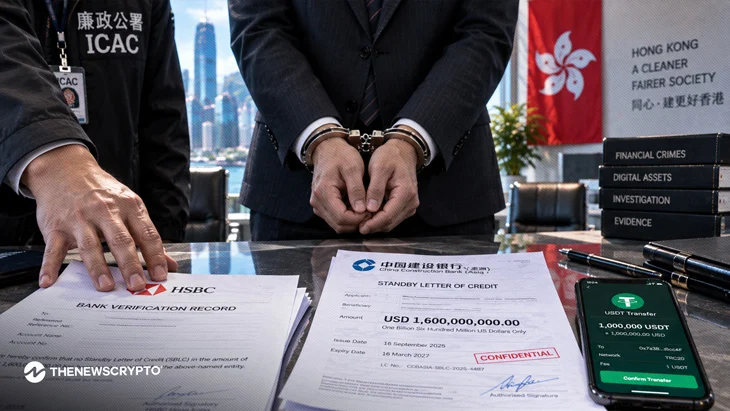
A former CCB Asia manager received a four-year prison sentence following the acceptance of over $470,000 in Tether bribes.
-
These bribes were connected to fraudulent letters of credit and collateral documentation totaling a combined stated value in excess of $1.6 billion.
Lam Chun-yin, a 32-year-old former relationship manager at China Construction Bank (Asia), was sentenced to four years behind bars at Hong Kong’s District Court on September 18. He had admitted guilt to conspiring with a fintech employee and other partners to accept bribes. According to the Independent Commission Against Corruption (ICAC), the cryptocurrency transfers exceeded US$470,000, roughly equal to HK$3.7 million. Additionally, Lam was mandated to pay back approximately HK$3.7 million to CCB Asia.
The conspiracy occurred between April and June 2022, utilizing Tether payments to validate several standby letters of credit (SBLCs) that falsely claimed origin from CCB. Furthermore, two collateral letters were improperly presented as issued by Yu Po Holdings and endorsed by CCB, carrying a collective stated value greater than US$1.6 billion.
False CCB Documents Tied to Vesttoo Investment Scheme
During his employment at CCB Asia’s consumer banking division within the Causeway Bay retail branch, Lam operated as a relationship manager. The ICAC noted he lacked authorization to handle business credit facilities or letters of credit. Despite this, he falsely positioned himself as the designated CCB contact for issuing SBLCs on behalf of Yu Po Holdings, an investor introduced via the fintech firm Vesttoo in early 2022.
Vesttoo managed an insurance-focused investment marketplace where participants were asked to supply bank-issued SBLCs as guarantees. The ICAC reported that Lam collaborated with a department head at Vesttoo alongside other associates to verify the fake documentation.
CCB Asia uncovered the operation through an internal inquiry, subsequently reporting the situation to the ICAC and providing support for the investigation. Investigators confirmed that neither CCB nor any of its sister companies generated the SBLCs or collateral letters in question.
This matter connects to the wider collapse of Vesttoo, which sought bankruptcy protection in 2023 following the discovery of fraudulent collateral papers. The fallout has since sparked various legal battles involving banks, insurance providers, and other market stakeholders.
During sentencing, Judge Ernest Lin Kam-hung stated that the employment of counterfeit bank papers exposed CCB to immense potential danger and damaged Hong Kong’s standing as a global financial hub. The magistrate initially handed down a six-year term, which was cut by one-third due to Lam’s guilty plea.
Highlighted Crypto News:
Coinbase CEO Armstrong Pushes Back as WSJ Prepares Story Blaming Him for CLARITY Act Failure
Frequently Asked Questions
Who is Lam Chun-yin?
Lam Chun-yin is a 32-year-old former relationship manager in the consumer banking division at CCB Asia’s Causeway Bay retail branch who was sentenced to four years in prison.
What was Lam convicted of?
He pleaded guilty to conspiring to accept more than $470,000 in Tether bribes in exchange for authenticating false financial documents worth over $1.6 billion.
Which organization uncovered the scheme?
The conspiracy was uncovered through an internal investigation by CCB Asia, which then reported the issue to Hong Kong’s Independent Commission Against Corruption (ICAC).
How does this connect to Vesttoo?
The fake CCB documents were used within Vesttoo’s insurance-related investment platform, which required participants to provide bank-issued SBLCs as guarantees before Vesttoo collapsed and sought bankruptcy protection in 2023.
